





South Korea ‘fake news’ law triggers free speech, censorship fears
The scope extends beyond social media to malicious reviews and defamatory posts on online communities, delivery apps and shopping platforms
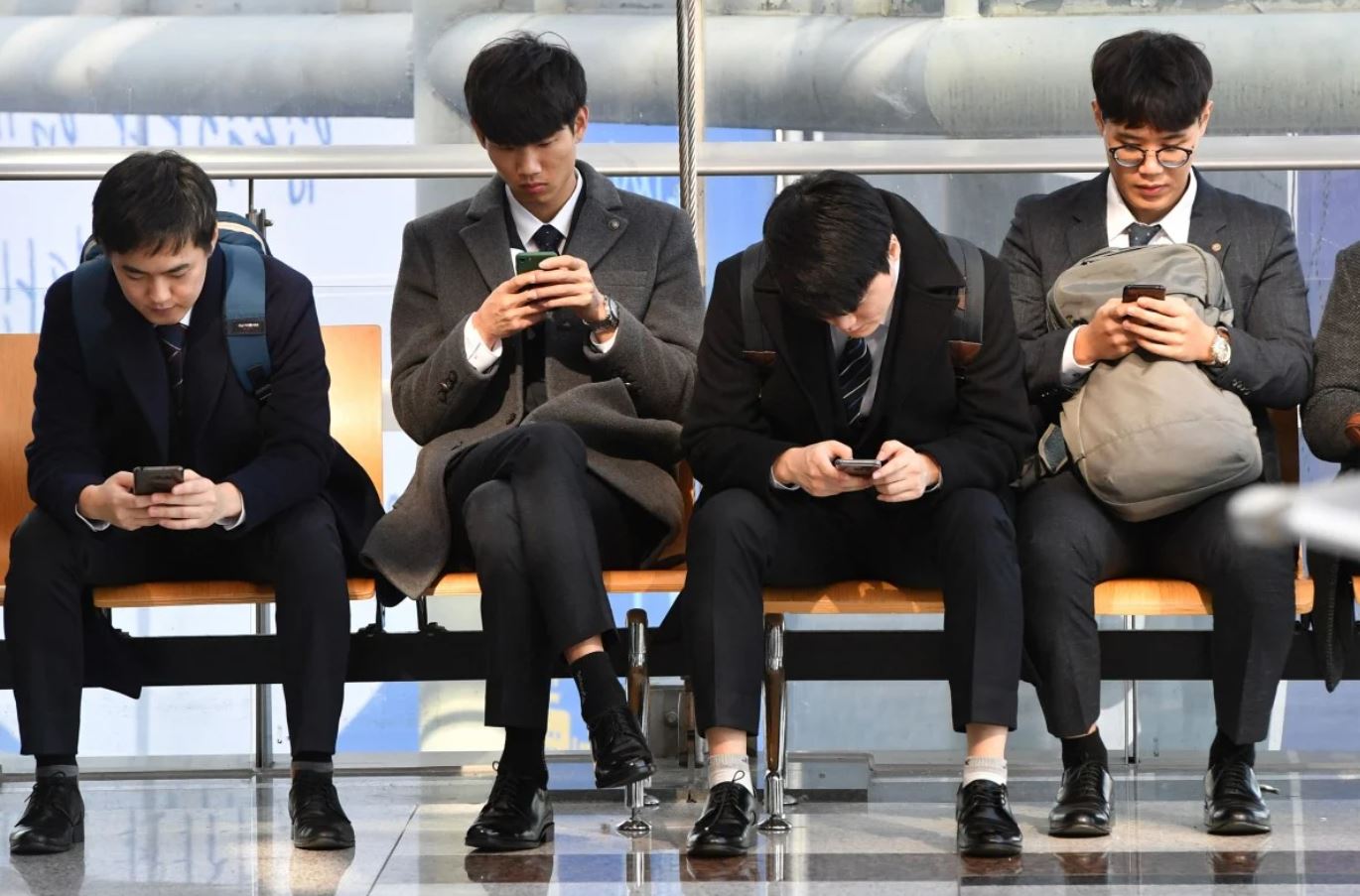
The scope extends beyond social media to malicious reviews and defamatory posts on online communities, delivery apps and shopping platforms
A viral YouTube video, a one-star review on a delivery app, a heated post on a parenting community – all of these will fall under the same legal standard in South Korea starting next Tuesday.
The revised Information and Communications Network Act, widely known as the “fake news” law, introduces punitive damages for YouTubers with more than 100,000 subscribers and high-traffic TikTok accounts if they display what authorities define as “unlawful” content. Platforms such as Naver, Kakao, Google and Meta stand to face steep penalties if they fail to police such content.
The enforcement decree spells out who can be sued for punitive damages over illegal and fabricated information.
Individuals on online platforms such as YouTube or TikTok who have posted at least three pieces of content over the past three months and either have more than 100,000 subscribers or average more than 100,000 monthly views in that period will fall under the definition of major online information producers.
If they are found to have deliberately spread false information that causes harm to obtain an unfair advantage, judges can impose damages of up to five times the proven loss. What can be considered an unfair advantage encompasses not just economic gains, but also intangible benefits such as expanding social or political influence.
Meanwhile, platforms with more than 1 million daily active users on average over the last three months are required to operate reporting and monitoring systems. Once a complaint is received, they must verify it through the new transparency centre under the state-run Korea Media and Communications Commission.
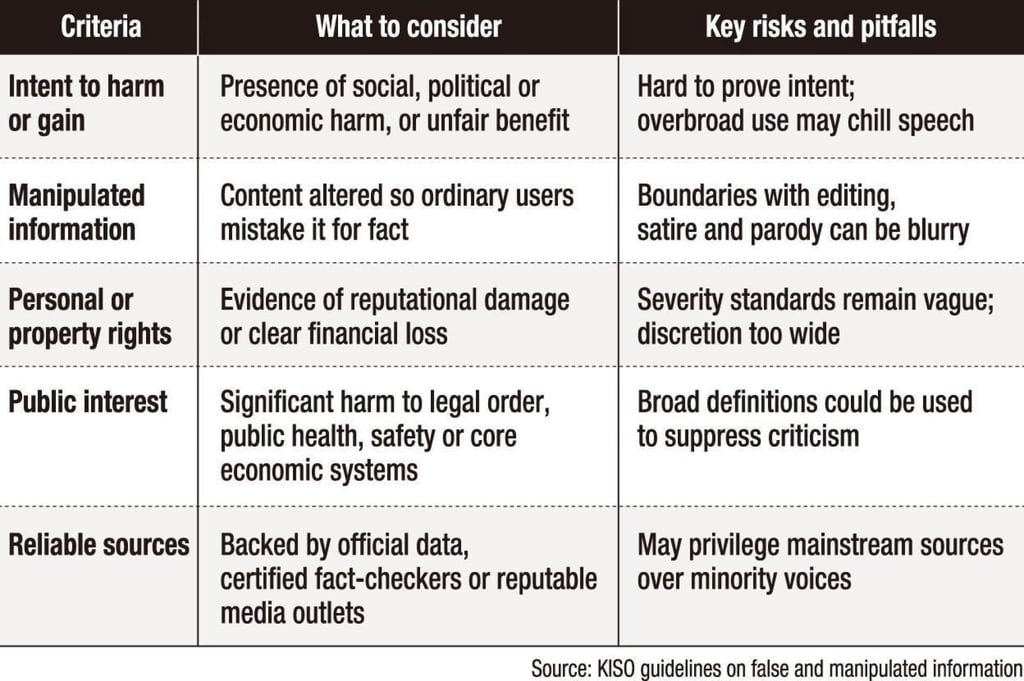
Any platform failing to delete content that has already been confirmed as unlawful faces corporate administrative surcharges. Should it refuse to obey formal government corrective orders to take down such content, its CEO can be held personally liable and prosecuted.
The scope extends beyond YouTube videos and social media posts. Malicious reviews and defamatory posts on parenting communities, delivery apps and online shopping platforms are subject to the same standard.
Major platforms are already scrambling to align their systems with the new regime, but say the law asks them to do something they are not designed to do: decide what is true.
“We are tightening our rules to match the new law,” a Naver representative said. “We will get guidelines through the Korea Internet Self-Governance Organisation (KISO). If a case feels ambiguous, we’ll have to send it back to KISO again for review. I think we’re going to have to go through that kind of process quite a lot in the early stages.”
Kakao, the operator of Korea’s most popular messaging app KakaoTalk, has taken a similar stance, according to a source familiar with the situation.
Due to the limits of its system for determining what was true and factual, Kakao “cannot realistically investigate the hidden motives behind each post or determine complex legal facts on its own, so it plans instead to request reviews from KISO and actively comply with the organisation’s deliberation results”, the source said.
Meta, a global company that operates popular platforms such as Facebook and Instagram, is also preparing for the new law, a source familiar with the matter said without elaborating.
A public relations agency representing Google Korea, a tech giant behind the search engine and YouTube, said it has not received guidance from the headquarters yet.
US scrutiny
The “fake news” law also carries diplomatic implications. The United States has recently taken issue with the European Union’s Digital Services Act (DSA), viewing it as an excessive restriction on free speech, and observers expect Washington to scrutinise South Korea’s approach as well, given that American firms are among the most prominent platforms affected.
Experts say the law stems from domestic anxiety over misinformation rather than any desire to single out US firms. But they also admit that South Korea-only rules placing heavy burdens on a few US tech giants could easily be recast as trade disputes or used as leverage in alliance politics, as has already occurred in Europe.
A media scholar, speaking on condition of anonymity, likened South Korea’s approach to Europe’s DSA, which defines very large platforms and imposes extensive obligations on them, many of which fall on US firms.
“The numeric thresholds we are now seeing for users and unloaders basically imitate it,” she said. “Europe has already faced criticism that this was about targeting American companies, and Korea risks inviting similar accusations.”
South Korea’s Starbucks shut for staff history lesson after ‘Tank Day’ promotion backlash
An industry expert, requesting anonymity, voiced a similar concern from the corporate side.
The law “can easily become a spark for trade disputes”, the expert said, pointing to the recent controversy over US-incorporated firm Coupang as an example of how regulatory issues could spill over into the broader Seoul-Washington relationship.
Conservative politicians and activists have condemned the law as a direct threat to freedom of expression and a step towards systemic censorship.
A petition on the National Assembly website calling for the repeal of the law gathered more than 140,000 signatures between May 26 and June 26.
Because the same liability rules apply to everything from viral YouTube videos to parenting forum posts, delivery app reviews and comments on shopping platforms, critics say the law will change how platforms behave towards disputed content.
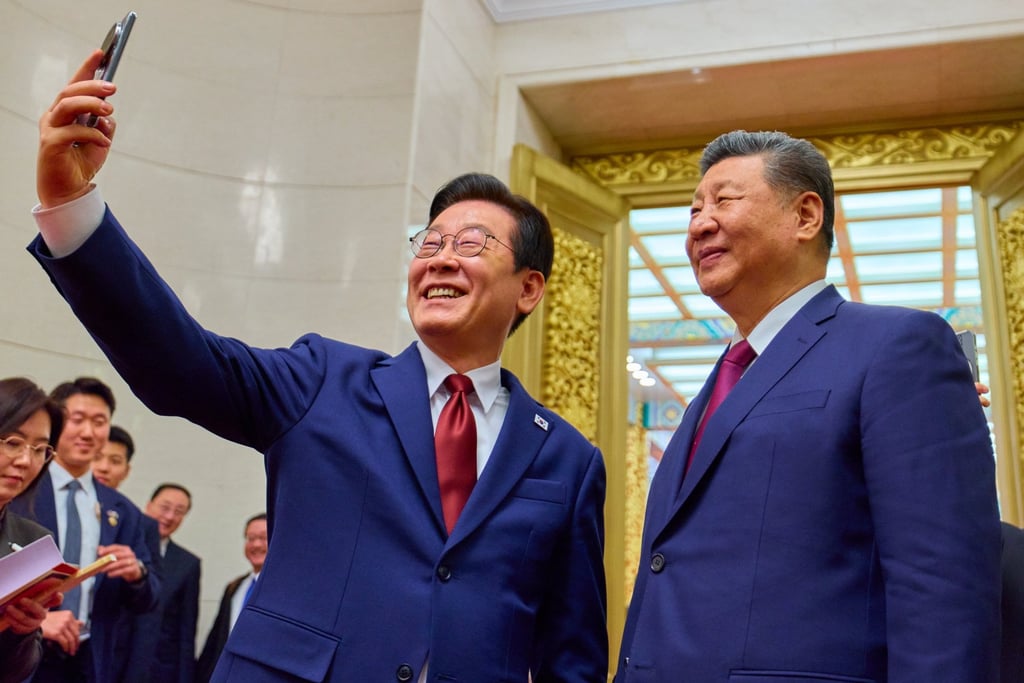
Faced with the legal risk, operators may decide it is safer to take down a contested review or post as soon as a conflict arises than to keep it up and risk being punished later, raising fears that disputed content could be removed much faster and more often than before.
Independent lawmaker Han Dong-hoon, former justice minister, warned that once the state was empowered to decide what counted as fact, online platforms would be pushed to filter out any information that did not fit its narrative.
“Put simply, the law tells portals and community operators to pre-screen and remove any posts the government deems illegal, and to punish them if they do not comply. Faced with that risk, operators will try to minimise their own liability by erring on the side of deleting more content than necessary, leading to confusion and harmful effects from censorship,” he said in a social media post.
Representative Kim Jae-sub of the main opposition People Power Party went further, likening the law to historic speech-control statutes under authoritarian regimes.
“Hitler had the Heimtuckegesetz, a law against malicious criticism, and Stalin had Article 58 of the Soviet criminal code banning anti-Soviet agitation,” he said. “Now the Lee Jae Myung administration has revised the Information and Communications Network Act, a ‘community censorship law’ that serves the same purpose: to shut down legitimate criticism of those in power.”
He cited past cases in which Lee and the ruling Democratic Party of Korea branded investigations into the Daejang-dong development scandal in Seongnam, Gyeonggi province, and a controversial trip by former Seoul mayoral candidate Chong Won-o, as “fake news” – only for those allegations to later be confirmed as true.
“Just imagine how convenient a governing tool this ‘community censorship law’ will be,” he added.
Fight the Censorship Join the Hopegirl Mailing List and get my free AudioBook: The QEG Chronicles Free Energy Full Disclosure: https://bit.ly/HGQEGBook
HopeGirl Youtube: https://www.youtube.com/@hopegirlblog
HopeGirl Telegram Channel Chat and Groups: https://t.me/Hopegirl587
Get Our Free EMF Survival Guide : https://bit.ly/FTWEMF
10 Percent Off our EMF Protection Products with this Link: https://www.ftwproject.com/ref/tenoff