





Multiple U.S Military Hackers Found Dead in ‘Suicide Cluster’
U.S. Cyber Command has launched an investigation after five military cybersecurity personnel were found dead within just weeks of each other, triggering the Pentagon’s designation of the alarming deaths as a “suicide cluster.”
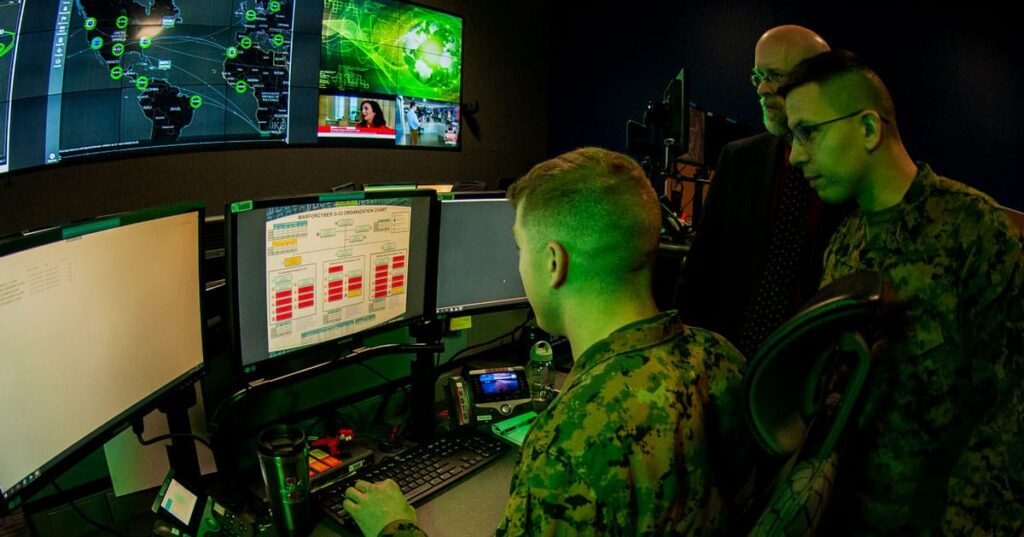
U.S. Cyber Command has launched an investigation after five military cybersecurity personnel were found dead within just weeks of each other, triggering the Pentagon’s designation of the alarming deaths as a “suicide cluster.”
The extraordinary concentration of deaths occurred between early June and early July among people who worked for or closely interacted with Cyber Command, according to internal military communications reviewed by Bloomberg.
The deaths came as America’s elite military hackers were facing surging workloads amid the Iran war and an accelerating global cyber arms race driven by increasingly powerful artificial intelligence.
Military officials have not established that the deaths are connected.
However, the number occurring within such a narrow period was sufficiently abnormal for Cyber Command to classify them as a “suicide cluster,” triggering intervention and a wider investigation.
Five Cyber Personnel Dead Within Weeks
As many as five people linked to Cyber Command were found dead of apparent suicide during the roughly month-long period, according to Bloomberg’s review of military records and interviews.
The Pentagon uses the term “suicide cluster” when multiple suicides occur unusually close together in time or location compared with what would normally be expected.
That designation has now placed Cyber Command under intense scrutiny.
The organization oversees some of the most sensitive military operations conducted by the United States.
Its personnel defend Pentagon networks from foreign attacks while simultaneously penetrating adversaries’ military computer systems.
Cyber operators can be tasked with crippling communications networks, disrupting air defenses, compromising command systems, and undermining enemy battlefield capabilities.
Much of that activity takes place behind the walls of highly secure facilities.
Almost all of it remains classified.
Military Hackers Have Been Showing Signs of Severe Strain
The psychological toll of military cyber operations has already raised alarm inside the Pentagon.
An Army-funded study cited by Bloomberg found that cyber operators commonly experienced serious symptoms including insomnia, memory problems, obsessive rumination, and physical illness.
Unlike conventional military personnel, cyber operators can spend enormous stretches of time inside secure rooms analyzing threats and conducting operations whose details they are legally forbidden from discussing outside classified environments.
The strain became serious enough that Congress intervened last year.
A 2025 defense law required Cyber Command to provide dedicated mental-health specialists specifically for military cyber personnel.
Those counselors must hold the security clearances necessary to discuss classified operations with the people carrying them out.
The cluster of deaths now raises questions over whether those protections have been enough.
Deaths Coincided with Intense Iran War Operations
The timing has drawn particular attention.
According to Bloomberg, Cyber Command personnel experienced a major increase in workload as America’s conflicts overseas intensified, especially during the war with Iran.
The deaths occurred during one of the most intense phases of that conflict.
Between June and early July, American and Iranian forces exchanged repeated attacks across the region.
U.S. Central Command targeted Iranian military communications and surveillance infrastructure.
Iran retaliated with strikes against American military installations in Kuwait and Bahrain.
Modern warfare increasingly depends on disabling an enemy’s digital infrastructure alongside conventional military strikes.
That puts Cyber Command personnel directly on the front lines of conflicts even when they are sitting thousands of miles away behind computer screens.
AI Arms Race Adds New Pressure
The pressure is also being intensified by artificial intelligence.
Cybersecurity specialists warn that rapidly advancing AI systems can identify vulnerabilities, generate malicious code, automate reconnaissance, and help launch increasingly sophisticated attacks.
Those same tools can be used by America’s adversaries.
The result is an accelerating race between offensive cyber capabilities and defensive systems attempting to stop them.
Military hackers are now being forced to defend against threats that can evolve at machine speed while simultaneously developing their own AI-enhanced offensive capabilities.
According to Bloomberg, that escalating technological arms race has contributed to the increased workload inside Cyber Command.
Congress Demands Answers
The deaths have now reached Capitol Hill.
The Senate Armed Services Committee is discussing additional mental-health resources with Cyber Command.
The House Armed Services Committee has described the rise in suicides as a “critical issue.”
The congressional attention comes after lawmakers had already ordered Cyber Command to strengthen psychiatric support for its personnel.
Now five deaths within a matter of weeks have forced the issue back into the spotlight.
Cyber Command Probes What Happened
No evidence has emerged showing that the five deaths were caused by a single event or shared circumstance.
Officials have not said that the individuals knew one another or were involved in the same classified operations.
The Pentagon has also not established that the Iran war, workload pressures, or AI-related operations caused the deaths.
But the concentration was abnormal enough to trigger the military’s formal “suicide cluster” designation.
That alone makes the development impossible to dismiss as routine.
Five people connected to one of America’s most secretive military commands died by suicide within approximately one month.
They worked inside a world of classified warfare, extraordinary operational pressure, and rapidly escalating technological threats.
Now Cyber Command is trying to determine why so many of its people died within such a short period and whether something inside America’s hidden cyber war is pushing its operators beyond their limits.
Source: https://slaynews.com/multiple-us-military-hackers-found-dead-suicide-cluster/
Fight the Censorship Join the Hopegirl Mailing List and get my free AudioBook: The QEG Chronicles Free Energy Full Disclosure: https://bit.ly/HGQEGBook
HopeGirl Youtube: https://www.youtube.com/@hopegirlblog
HopeGirl Telegram Channel Chat and Groups: https://t.me/Hopegirl587
Get Our Free EMF Survival Guide : https://bit.ly/FTWEMF
10 Percent Off our EMF Protection Products with this Link: https://www.ftwproject.com/ref/tenoff