





South Korea Taps Toss Payments to Route CBDC Into Merchant Checkouts Without Replacing Terminals
South Korea has named Toss Payments — the payment-gateway arm of super-app operator Viva Republica — as preferred negotiator for a ₩9.6 billion (~$6.7 million) government contract to connect the country’s deposit-token network to the point-of-sale systems used by millions of small businesses, extending Project Hangang’s central bank digital currency infrastructure into civilian commerce for the first time.
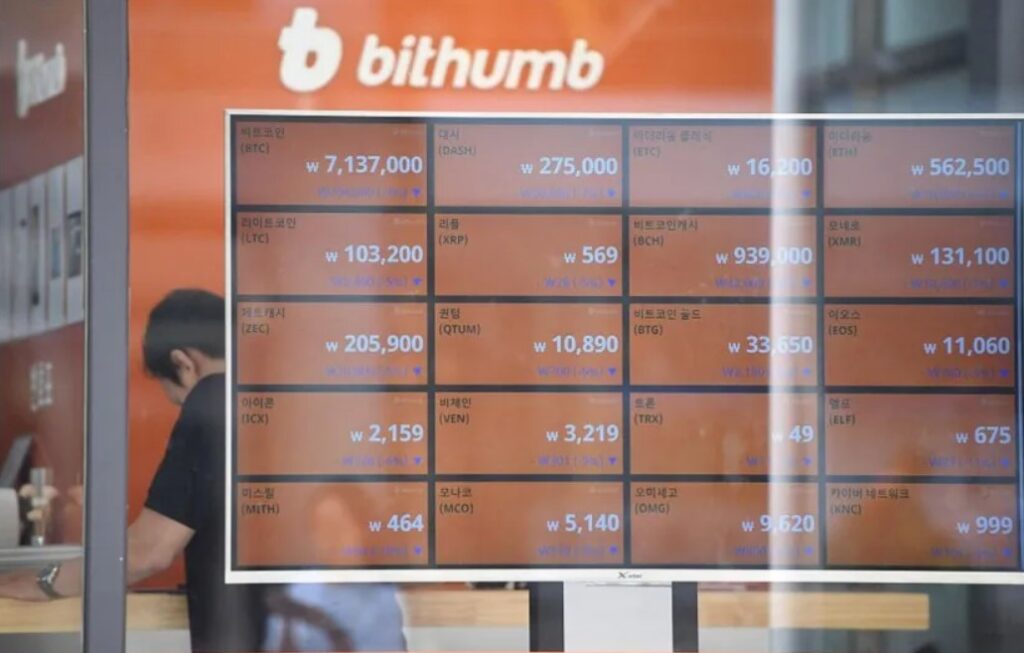
Toss Payments wins South Korea’s CBDC merchant gateway contract, targeting millions of small shops
South Korea has named Toss Payments — the payment-gateway arm of super-app operator Viva Republica — as preferred negotiator for a ₩9.6 billion (~$6.7 million) government contract to connect the country’s deposit-token network to the point-of-sale systems used by millions of small businesses, extending Project Hangang’s central bank digital currency infrastructure into civilian commerce for the first time.
The contract was awarded by the Ministry of Science and ICT (MSIT) and the Korea Internet & Security Agency (KISA) under their 2026 Blockchain Innovation Leading Project program. A joint launch ceremony was held on July 22 at KISA’s Seoul headquarters. The Korea Financial Telecommunications and Clearings Institute (KFTC) will serve as the project’s lead organizer, coordinating a consortium of nine commercial banks, eight payment gateways, and two major retailers, with real-world merchant testing scheduled to begin in the second half of 2026.
The critical design decision — and the one that makes this contract significant beyond its contract value — is backward compatibility. Merchants will not need to replace existing point-of-sale terminals or rebuild back-office integrations. Toss Payments, using its existing payment-gateway infrastructure and merchant relationships, will bridge deposit-token wallet transactions to the payment rails merchants already use.
What Deposit Tokens Are, and Why They Differ from Stablecoins and Retail CBDC
South Korea’s approach to digital money is easily misread as another blockchain payment experiment. Understanding why it is not requires understanding what a deposit token actually is — and what it is not.
A deposit token is a blockchain-based digital representation of a conventional bank deposit. The underlying liability stays on the issuing bank’s balance sheet, subject to the same regulatory requirements as any other deposit — including deposit insurance coverage. This distinguishes deposit tokens from stablecoins, which are claims on the stablecoin issuer rather than on a regulated bank, a distinction the Bank for International Settlements identified in April 2023 as structurally significant for the stability of the monetary system.
It also distinguishes them from a retail central bank digital currency, in which the central bank issues digital currency directly to the public. Under Project Hangang, the Bank of Korea issues wholesale CBDC only to financial institutions. Those institutions then create deposit tokens, which consumers hold and spend through bank-provided wallet apps. The central bank provides the settlement backbone; the banks maintain the customer relationship.
The mechanism that makes this work — and that the Bank for International Settlements identified as the critical design choice for preserving what monetary economists call the “singleness of money” — is the burn-and-issue protocol. When a customer of Bank A pays a merchant whose account is at Bank B, three steps execute as a single atomic transaction via smart contract: the sending bank’s deposit tokens are burned; an equivalent amount of wholesale CBDC transfers between the two banks on the Digital Currency System (DCS), the Bank of Korea’s permissioned Hyperledger Besu ledger; and the receiving bank reissues deposit tokens to the merchant. If any one step fails, the entire transaction is voided — there is no partial settlement, no gap between delivery and payment, no counterparty risk.
Private stablecoins cannot make the same guarantee. A stablecoin transfer transfers a claim on the issuer; if that issuer’s reserves or creditworthiness deteriorates, the token’s value can diverge from par. That is a structural property of the instrument — not a risk-management question — and it is why the BIS concluded in April 2023 that stablecoins circulating as bearer instruments are inherently less compatible with monetary singleness than deposit tokens that settle in central bank money.
The Technical Stack: Hyperledger Besu, Proof of Authority, and a BOK-Wire+ Gap That Remains Open
Project Hangang’s Digital Currency System runs on Hyperledger Besu, an open-source permissioned blockchain platform. The Bank of Korea operates as the sole validator under a Proof of Authority consensus model — meaning the central bank finalizes every transaction rather than relying on distributed validation. This design avoids the congestion, fee volatility, and fragmentation risks of public blockchains.
The token architecture separates value transfer from conditions. A currency layer, implemented in ERC-20 (the standard for fungible blockchain tokens), handles the actual movement of money. A separate conditions layer, implemented in ERC-1155 and being upgraded to ERC-3525, carries the programmable spending restrictions — which vendors are approved, which time windows are permitted, which expense categories qualify — without embedding that logic in the money itself. A coding error in a spending-condition contract cannot corrupt the fungibility of the underlying deposits; the money and the rules live in separate objects. The full architecture is documented in the Bank of Korea’s detailed Project Hangang Phase 2 technical overview.
The Toss Payments integration layer will sit between consumers’ bank-issued deposit-token wallet apps and the merchant-side acquiring infrastructure. When a consumer pays by scanning a QR code or tapping their phone, the bank wallet initiates a deposit-token transaction on the DCS; Toss Payments, acting as the payment gateway, routes the confirmation to the merchant’s existing POS terminal through the payment rails the merchant already uses. No new terminal hardware, no new merchant software integration, no retraining — the deposit-token payment arrives at the merchant’s existing system as a settled payment.
The significance of this design is not merely operational convenience. Prior CBDC pilot programs globally have consistently stalled at the merchant layer, because requiring merchants to replace terminals or rebuild integrations creates an adoption barrier that no incentive structure has reliably overcome. South Korea’s combination of atomic interbank settlement (solving the monetary-system design problem identified by the BIS) and backward-compatible POS integration (solving the adoption-friction problem) constitutes the first documented real-world attempt to address both simultaneously at scale. The BIS identified both problems in its 2023 Annual Economic Report’s “unified ledger” blueprint; no central bank had moved from blueprint to signed private-sector contract on both dimensions until now.
One constraint that the Toss Payments contract does not resolve is the engineering gap between the DCS and South Korea’s legacy interbank settlement system. The DCS operates around the clock; BOK-Wire+, which has handled South Korean interbank settlement since 1994, operates only on weekdays from 9:00 a.m. to 8:00 p.m. The two systems reconcile offline via encrypted USB media, with changes in each bank’s wholesale CBDC balance captured in a daily 3:00 p.m. snapshot rather than in real time. Bank of Korea Governor Shin Hyun-song acknowledged this in a paper for the European Central Bank Forum on Central Banking 2026 as a “transitional arrangement” requiring resolution before true 24/7 continuous commercial operation becomes possible.
From Lab to Storefront: How Project Hangang Reached This Point
South Korea’s CBDC journey began with Project Hangang Phase 1, which ran from April to June 2025 with seven banks and approximately 12,000 merchant locations, generating roughly 114,880 transactions. The pilot confirmed technical reliability but revealed an adoption problem: of 100,000 citizens invited to participate, about 80,000 opened wallets, and total payment volume reached approximately ₩692 million (about $483,000) — modest against the roughly ₩30 billion to ₩35 billion ($20.9 million to $24.4 million) the participating banks collectively spent building Phase 1 infrastructure.
Phase 2, launched in March 2026 with nine banks, broadened the scope. It added biometric payment approvals, person-to-person wallet transfers, automatic top-ups, recurring autopayments, and the first live programmable government disbursements — delivering electric vehicle charging subsidies to qualifying operators via smart contracts that enforce approved vendors, time windows, and expense categories at the moment of transaction, blocking fraud before money moves rather than auditing receipts after. The Financial Services Commission formally designated Phase 2 as an “innovative financial service” on July 15, 2026 — a regulatory sandbox classification that allows the nine participating banks to issue deposit tokens to up to 500,000 users, with large-scale live transactions targeting September. All of this context and technical detail is covered in the prior TechTimes report on Project Hangang Phase 2.
The MSIT/KISA merchant infrastructure contract announced Thursday is the next layer on that foundation. Of the ₩9.6 billion ($6.7 million) total budget, approximately ₩3 billion ($2.1 million) will be allocated specifically to development, operations, and promotional activities involving small and medium-sized enterprises, startups, and information technology firms participating in system development and commercialization. Participating commercial banks and other consortium members plan to undertake additional related projects valued at approximately ₩4.5 billion ($3.1 million) alongside the main initiative.
Read more: South Korea Moves Digital Won Into Real Government Funds as US Blocks CBDC
Lower Fees, Faster Settlement: What South Korean Small Businesses Stand to Gain
The government’s explicit rationale for the project is fee relief for South Korea’s small-business sector. South Korea’s card payment ecosystem routes funds through a chain of acquirers, card networks, and issuers, each extracting a transaction toll. Deposit-token payments, settling directly on blockchain infrastructure with the Bank of Korea’s wholesale CBDC as the backbone, are expected to carry materially lower per-transaction costs by eliminating card-network intermediary fees.
Settlement timing is the second commercial benefit. Conventional card transactions in South Korea typically take one to three business days to settle to a merchant’s account. Because deposit tokens represent actual bank funds moving atomically with the payment instruction, settlement can in principle be instantaneous — a significant cash-flow benefit for small businesses that depend on rapid capital turnover. The BOK-Wire+ reconciliation constraint means fully instantaneous 24/7 settlement is not yet operational for weekday-off-hours and weekend transactions; however, within BOK-Wire+ operating hours, the DCS enables real-time finality at the interbank leg.
Toss Payments in the Larger Toss Ecosystem
Toss Payments is the payment-gateway subsidiary of Viva Republica, the Seoul-based fintech company founded in 2013 by Lee Seung-gun, a former dentist who built the Toss super app into one of South Korea’s most-used financial platforms. The broader Toss ecosystem spans banking, securities, insurance, payments, and merchant services, serving tens of millions of users across South Korea. Viva Republica has been separately pursuing a US initial public offering, with Reuters reporting in 2025 that the company was targeting a listing at a valuation above $10 billion.
Separately, Viva Republica has been developing a proprietary blockchain mainnet and exploring stablecoin applications — a parallel track to the regulated CBDC infrastructure of the Toss Payments contract. Lee Seung-gun has stated his intention to issue a Korean won-denominated stablecoin once regulations permit it. The two tracks — government CBDC gateway and private stablecoin ambition — are not mutually exclusive, but they operate under different legal frameworks and different institutional relationships. The MSIT/KISA contract positions Toss Payments within regulated central bank infrastructure; the stablecoin track operates under the still-unresolved Digital Asset Basic Act, which is targeted for National Assembly passage in the second half of 2026.
The CBDC gateway contract adds an institutional infrastructure dimension to Toss Payments’ consumer-facing portfolio. As preferred negotiator for the government’s flagship CBDC commercialization project, Toss Payments is positioned at the center of what could become the next generation of South Korea’s payment architecture — one that settles instantly, operates around the clock, and costs merchants less per transaction.
Read more: South Korea Folds Crypto Into National Asset Law as Japan Passes Its Own Reform
Will Merchants Have to Change Anything to Accept Digital-Won Payments?
The short answer is no — and the long answer explains why backward compatibility is the architectural choice that distinguishes this rollout from most prior CBDC merchant adoption attempts.
Under the consortium structure, merchants accept deposit-token payments through existing POS terminals. Consumers initiate payments using bank-provided deposit-token wallet applications, scanning QR codes or tapping their phones at the same terminals they already use for card payments. Toss Payments, as the payment gateway, handles the bridge between the bank-wallet transaction on the DCS and the merchant’s existing acquiring relationship. The merchant receives confirmation and settlement through the same channels currently used for card payment processing, as the KISA/MSIT project documentation confirms.
The eight payment gateway firms in the consortium alongside Toss Payments ensure that deposit-token acceptance will be available across a broad cross-section of acquiring relationships from day one, rather than being siloed within a single provider’s merchant base. The two major retail partners in the consortium provide the pilot merchant locations where real-world testing will begin in the second half of 2026.
Currency conversion note: All won-to-dollar conversions in this article use the approximate exchange rate of ₩1,432 per US dollar as of July 31, 2026, and are rounded for readability. Conversions are approximate and subject to rate fluctuation.
Frequently Asked Questions
What is a deposit token, and why does South Korea use them instead of a retail CBDC?
A deposit token is a blockchain-based digital representation of a conventional bank deposit. The liability stays on the issuing bank’s balance sheet, covered by deposit insurance and subject to existing bank regulations. South Korea chose this model rather than a retail central bank digital currency — in which the central bank issues digital money directly to the public — to preserve the commercial banking sector’s role in credit creation and customer relationships. The Bank of Korea issues wholesale CBDC only to the nine participating banks; those banks issue deposit tokens to consumers. The burn-and-issue settlement mechanism ensures that when a deposit token moves between customers of different banks, all three steps (burn, interbank CBDC transfer, reissue) execute atomically — meaning every deposit token settles at par in central bank money, regardless of which bank issued it. This is what monetary economists call the “singleness of money,” and it is the property that private stablecoins cannot reliably guarantee.
Will South Korean merchants have to replace their payment terminals or rebuild their software to accept deposit-token payments?
No. The Toss Payments integration is specifically designed to be backward compatible with existing point-of-sale hardware and acquiring relationships. Consumers will pay using bank-issued deposit-token wallet apps; Toss Payments bridges those transactions to merchants’ existing payment rails. A merchant who currently accepts card payments will be able to accept deposit-token payments through the same terminal, without new hardware, software integration, or staff retraining. This design choice — prioritizing backward compatibility over a purpose-built new payment network — is what allowed the government to assemble a nine-bank, eight-payment-gateway consortium rather than requiring a full infrastructure replacement.
When will South Korea’s deposit-token payment network be available to ordinary consumers and businesses?
Phase 2 of Project Hangang, which authorized up to 500,000 consumers to hold deposit-token wallets at nine participating banks, is targeting large-scale live transactions beginning in September 2026. The MSIT/KISA merchant infrastructure project — the Toss Payments contract — is scheduled to begin real-world testing in merchant environments in the second half of 2026, with detailed development and integration planning now underway with the consortium partners. A full commercial rollout depends on resolving several open questions: the engineering gap between the DCS and South Korea’s legacy BOK-Wire+ settlement system, the legal status of wholesale CBDC issued natively on the DCS, and the Digital Asset Basic Act’s final rules governing stablecoin issuance and the digital currency regulatory framework.
How does this compare to what other countries have done with CBDCs?
Only three countries have launched a retail central bank digital currency — the Bahamas (Sand Dollar, October 2020), Nigeria (eNaira, 2021), and Jamaica (Jam-Dex, 2022) — and all three use a direct-retail issuance model rather than South Korea’s wholesale-plus-deposit-token approach. China’s digital yuan (e-CNY) is the largest CBDC pilot, having processed more than 3.4 billion transactions worth roughly 16.7 trillion renminbi (approximately $2.3 trillion USD) by late 2025, according to the Atlantic Council CBDC Tracker; it is a retail CBDC issued directly by the People’s Bank of China through state-owned banks, not a deposit-token system. South Korea’s combination of atomic interbank settlement through wholesale CBDC and backward-compatible merchant gateway integration is architecturally distinct from both models — and represents the first major government-backed attempt to validate the BIS’s 2023 “unified ledger” blueprint for tokenized deposits at the civilian point-of-sale layer.
Fight the Censorship Join the Hopegirl Mailing List and get my free AudioBook: The QEG Chronicles Free Energy Full Disclosure: https://bit.ly/HGQEGBook
HopeGirl Youtube: https://www.youtube.com/@hopegirlblog
HopeGirl Telegram Channel Chat and Groups: https://t.me/Hopegirl587
Get Our Free EMF Survival Guide : https://bit.ly/FTWEMF
10 Percent Off our EMF Protection Products with this Link: https://www.ftwproject.com/ref/tenoff