




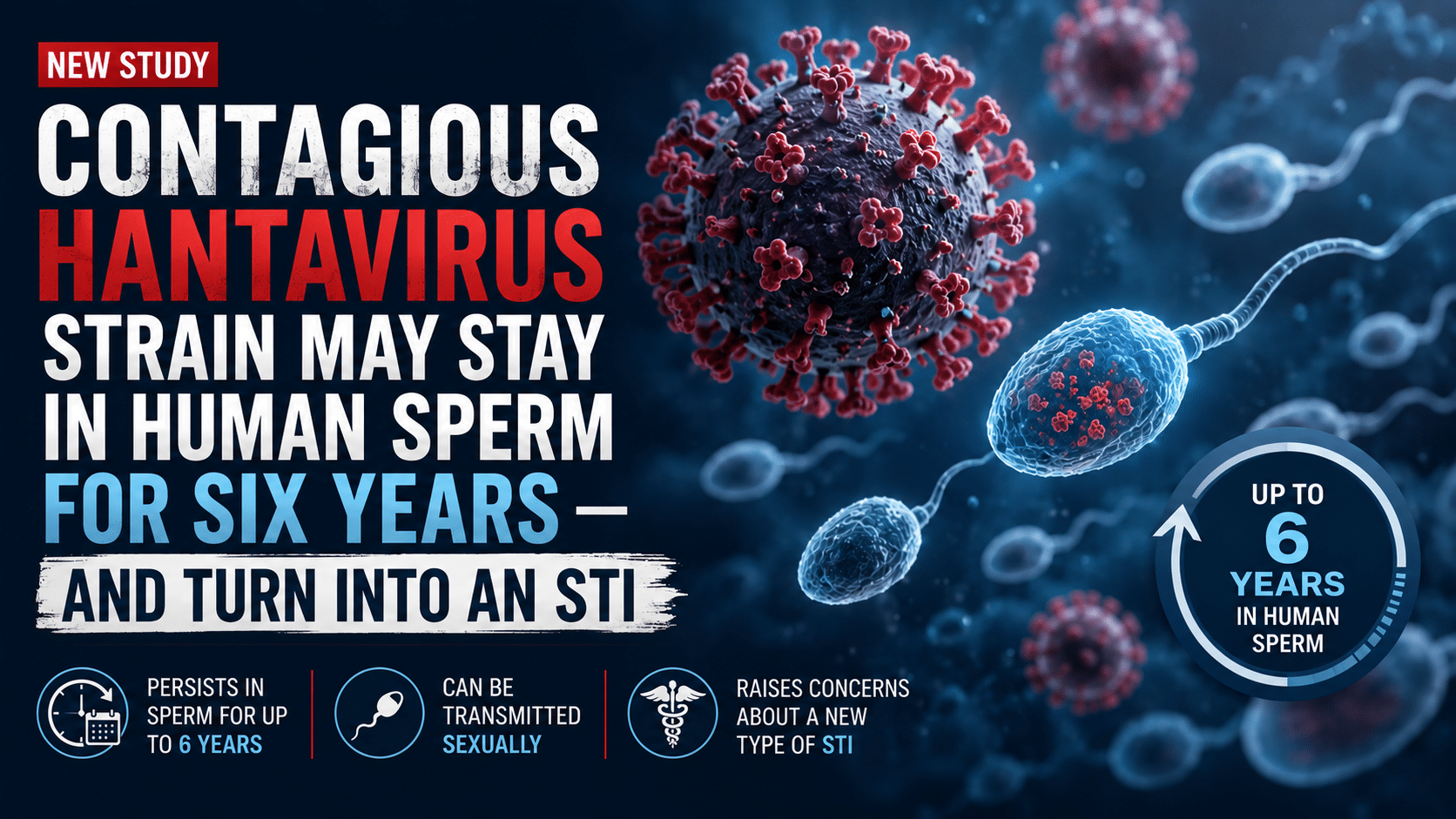
Contagious hantavirus strain may stay in human sperm for six years — and turn into an STI
According to a report from the New York Post, a disturbing new dimension has emerged in the ongoing monitoring of the rare and deadly Andes strain of hantavirus, which recently caused an outbreak aboard a luxury cruise ship.
According to a report from the New York Post, a disturbing new dimension has emerged in the ongoing monitoring of the rare and deadly Andes strain of hantavirus, which recently caused an outbreak aboard a luxury cruise ship.
A peer-reviewed study has revealed that the virus can linger in male semen long after the body has cleared it from blood, urine, and the respiratory tract, potentially allowing sexual transmission even years after recovery.
Researchers at Switzerland’s Spiez Laboratory examined a 55-year-old man infected with the Andes strain six years earlier. The virus had vanished from his bloodstream and other typical sites, yet it remained detectable in his semen. The team concluded it could stay transmissible for up to 71 months—nearly six years—after initial infection.
“Taken together, our results show that the Andes virus has the potential for sexual transmission,” the study authors stated, while noting that no confirmed cases of sexually transmitted Andes hantavirus have been documented to date.
The findings, published in the journal Viruses, highlight how the testes serve as a “safe harbor” for certain pathogens. Because sperm cells are protected from immune attack to enable reproduction, viruses like hantavirus, Ebola, and Zika can persist undetected. Factors such as initial viral load and the pathogen’s ability to replicate in reproductive tissues influence this persistence.
This revelation comes amid heightened global attention to the Andes hantavirus following its outbreak on the MV Hondius cruise ship in early May.
The primarily rodent-borne virus, capable of rare person-to-person spread, has so far claimed three lives—a Dutch couple and a German national—linked to the vessel. Health authorities expect additional cases from the cluster but emphasize it does not pose a pandemic risk comparable to COVID-19.
Experts, including those at disease forecasting firm Airfinity, urge male survivors to adopt precautions modeled on WHO guidance for Ebola survivors. This includes regular semen testing, consistent condom use, or abstinence until cleared by two consecutive negative tests, along with thorough hygiene practices after any contact with semen.
Fight the Censorship Join the Hopegirl Mailing List and get my free AudioBook: The QEG Chronicles Free Energy Full Disclosure: https://bit.ly/HGQEGBook
HopeGirl Youtube: https://www.youtube.com/@hopegirlblog
HopeGirl Telegram Channel Chat and Groups: https://t.me/Hopegirl587
Get Our Free EMF Survival Guide : https://bit.ly/FTWEMF
10 Percent Off our EMF Protection Products with this Link: https://www.ftwproject.com/ref/tenoff