





Drought Grips Great Plains, Threatening US Wheat Harvests and Forcing Cattle Herd Reductions
According to a Bloomberg report, farmers and ranchers across the Great Plains are facing a severe spring drought that is withering winter wheat crops and pressuring livestock operations, with conditions showing little sign of immediate relief.
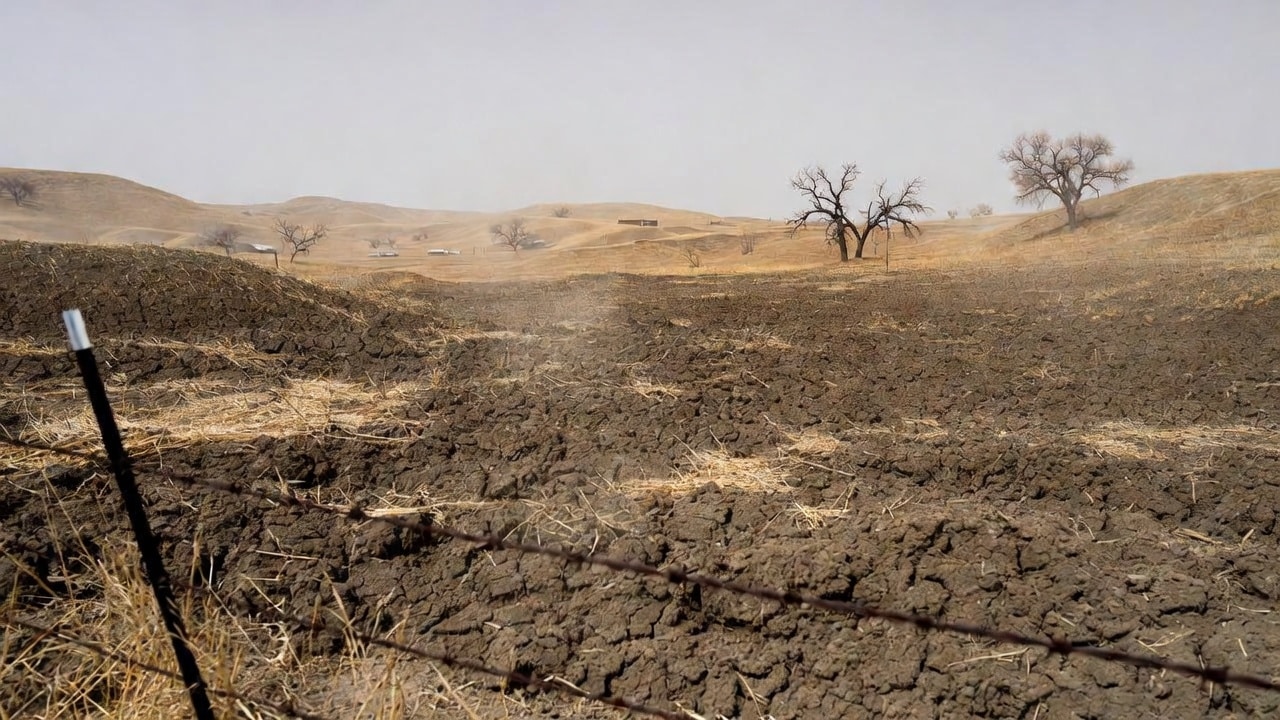
According to a Bloomberg report, farmers and ranchers across the Great Plains are facing a severe spring drought that is withering winter wheat crops and pressuring livestock operations, with conditions showing little sign of immediate relief.
The dryness, following weeks of minimal rainfall and a late-winter heat wave that sparked widespread pasture fires, is expected to continue.
Drought now blankets nearly 90% of Nebraska and Oklahoma, with more than half of Nebraska classified as in “extreme” drought. Such conditions have historically led producers to sell off livestock and prompted desperate measures like drilling new irrigation wells as water sources dwindle.
The next few weeks are pivotal for growers as winter wheat heads into its critical maturation phase ahead of summer harvest. Insufficient moisture leaves wheat shoots unable to properly fill grain heads. In some cases, farmers are opting to let cattle graze the fields rather than risk a failed harvest.
“We’ve got a lot of modern precedent for these very rough conditions heading into the spring growing season, but this certainly ranks up there with some of the worst we’ve seen,” said Brad Rippey, a meteorologist for the US Department of Agriculture.
USDA data shows only 30% of the US winter wheat crop rated good to excellent as of recent assessments—the lowest since 2023. Roughly half the crop in key states including Colorado, Nebraska, Oklahoma, and Texas is poor to very poor, signaling substantial yield risks.
The drought compounds economic strains, including elevated fertilizer costs tied to global events. US Representative Frank Lucas, a Republican from Oklahoma, noted he skipped nitrogen applications on his western Oklahoma wheat fields.
“I didn’t have enough moisture — it wouldn’t have done any good,’’ Lucas said. “Number two, I’m not even sure what the cost would be.”
Ranchers are also thinning herds amid soaring feed costs and fire damage that burned about 1 million acres of pasture and hayfields by late March.
This setback further complicates efforts to rebuild the US cattle herd, already at a 75-year low. “Drought just sets everything back,” said Ben Smith, field operations manager with the nonprofit Farm Rescue.
While global grain supplies may cap price spikes, moisture remains “desperately needed” in the Plains, where forecasts point to continued dry and warm conditions into July. Relief from a shift to El Niño patterns may come too late for this season’s critical windows.
Fight the Censorship Join the Hopegirl Mailing List and get my free AudioBook: The QEG Chronicles Free Energy Full Disclosure: https://bit.ly/HGQEGBook
HopeGirl Youtube: https://www.youtube.com/@hopegirlblog
HopeGirl Telegram Channel Chat and Groups: https://t.me/Hopegirl587
Get Our Free EMF Survival Guide : https://bit.ly/FTWEMF
10 Percent Off our EMF Protection Products with this Link: https://www.ftwproject.com/ref/tenoff