




Trump’s Tariffs Ruled Illegal — Again: How Executive Overreach Is Causing Permanent Economic Damage
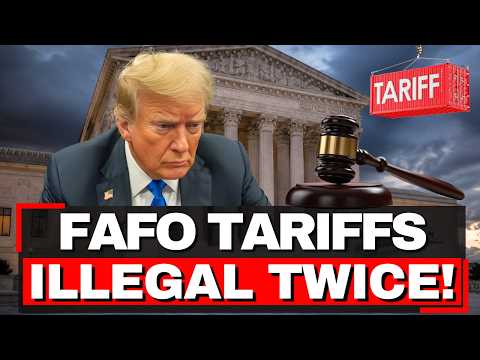
Federal courts have now ruled Trumps tariffs illegal twice in three months. American businesses and consumers are paying the price.
Courts Keep Striking Them Down. Trump Keeps Imposing Them.
A federal court ruled Thursday against the new global tariffs that President Trump imposed after a stinging loss at the Supreme Court. A split three-judge panel of the Court of International Trade in New York found that 10% global tariffs were illegal after small businesses sued. The court ruled 2-1 that Trump overstepped the tariff power that Congress had allowed the president under the law.
The tariffs are invalid and unauthorized by law, the majority wrote.
This is the second time in three months courts have ruled Trump’s tariffs illegal. He keeps imposing them. Courts keep striking them down. And American businesses and consumers pay the price while Trump pretends he has authority he doesn’t legally possess.
The Pattern: Same Tariffs, Different Legal Justification
The Supreme Court ruled February 28 that the International Emergency Economic Powers Act (IEEPA) did not authorize the tariffs. Last year, Trump invoked the 1970 International Emergency Economic Act to declare the nation’s long-standing trade deficit a national emergency, justifying sweeping global tariffs. The Supreme Court said no — that law doesn’t give tariff authority.
So Trump switched laws. At issue are temporary 10% worldwide tariffs — the Trump administration imposed after the Supreme Court in February struck down even broader double-digit tariffs the president had imposed last year. Same tariffs, different legal justification. Courts just struck that down as well.
The pattern is clear: Trump imposes tariffs using emergency powers he doesn’t actually have. Courts rule those illegal. Trump immediately reimposes similar tariffs using different statutory authority. Courts rule those illegal too. And meanwhile, businesses paid billions in tariffs that were never legally authorized, inflation accelerated, and the economic damage already happened.
The fact that courts eventually strike down illegal tariffs does not undo the harm they cause while in effect.
What Legal Authority Did Trump Actually Try Using This Time?
The U.S. Court of International Trade ruled 2-1 against the Trump administration’s invocation of Section 122 of the Trade Act of 1974 to implement a 10% global tariff. The use of Section 122 to impose 10% global tariffs was deemed illegal because the condition for allowing executive imposition of tariffs is not met in the current state of the American economy.
Section 122 allows the president to act in response to large and serious United States balance of payments deficits. The Trump administration conflated balance of payments deficits with trade deficits to justify the tariffs. But this is not a technical distinction — it’s Trump fundamentally misunderstanding economics.
The United States does not and cannot, while maintaining floating exchange rates, have a balance of payments deficit. That is basic international economics. Balance of payments deficits occur under fixed exchange rate systems when countries run out of foreign reserves. The U.S. has a floating exchange rate. The dollar adjusts to balance payments automatically. Trump claimed a balance of payments crisis that doesn’t exist to justify tariffs. Courts just ruled he has no authority to impose them.
The Constitutional Framework Trump Keeps Ignoring
The U.S. Constitution gives Congress the power to establish taxes, including tariffs. Congress can authorize presidents to impose tariffs — but only under specific conditions defined by statute.
IEEPA does not authorize tariffs for trade deficits — the Supreme Court ruled that in February. Section 122 does not authorize tariffs when no balance of payments crisis exists — the Court of International Trade just ruled that on Thursday. Trump keeps reaching for statutory authority that doesn’t cover what he’s trying to do.
That is the constitutional framework. Congress delegates tariff power conditionally. Trump has now exceeded those conditions twice — with two separate courts confirming he never had the legal authority to act.
Who Won — And What the Ruling Actually Covers
The court’s decision directly applied only to three of the plaintiffs: the state of Washington, and two businesses — spice company Burlap & Barrel and toy company Basic Fun. It’s not clear whether other businesses would have to continue to pay the tariffs.
“We fought back today and we won, and we’re extremely excited,” said Jane Forman, CEO of Basic Fun. Small businesses sued because they were paying illegal taxes, won in court — but the ruling scope remains unclear for other companies still paying the same tariffs.
Dave Townsend, a trade lawyer at Dorsey & Whitney, said the ruling will open the door for more companies to request that the tariffs be thrown out and that any payments they made be refunded. Other importers likely will not ask for a broader remedy that applies to more companies, Townsend said, though he also cautioned the case could reach the Supreme Court as well.
That’s the mechanism: companies can now demand refunds on tariffs courts ruled illegal. But Trump will appeal, prolonging the process while businesses continue paying tariffs that may ultimately get refunded — years later.
The Real Economic Damage: $1,700 Per Household, Crashed Markets, Killed Companies
Trump’s tariffs didn’t shield the economy. They raised prices, accelerated inflation, killed Spirit Airlines, cost the average household $1,700, crashed the stock market 11% in four days, and decimated manufacturing employment. Courts ruling them illegal doesn’t reverse any of that damage. It just confirms Trump never really had legal authority to cause it in the first place.
Moody’s chief economist says the data is definitive: tariffs do significant damage. Job growth stopped. Inflation accelerated. Manufacturing employment fell. The stock market crashed. And now two separate courts have ruled that the tariffs were never legally authorized in the first place.
Companies paid tens of billions between Liberation Day and the Supreme Court ruling, then billions more before Thursday’s decision. Those payments may get refunded — after years of litigation. But businesses that went bankrupt waiting won’t come back. Inflation won’t reverse. Cancelled contracts and delayed investments won’t reset. Legal vindication doesn’t undo economic catastrophe.
What Happens Next: Appeals, New Probes, and More Tariffs
If the administration appeals Thursday’s decision as expected, it would first turn to the U.S. Court of Appeals for the Federal Circuit, based in Washington — and then potentially the Supreme Court. Trump will appeal. He’ll lose again. The Supreme Court already ruled against his tariff authority in February. They’re not reversing themselves three months later.
But appeals take time. And during that time, businesses keep paying tariffs, consumers keep facing higher prices, and the economic damage continues to compound.
Trump is widely expected to try to replace the tariffs that have been struck down yet again. The administration is conducting two investigations that could end in more tariffs. The Office of the U.S. Trade Representative is looking into whether 16 U.S. trading partners — including China, the European Union, and Japan — are overproducing goods, driving down prices, and putting U.S. manufacturers at a disadvantage. Another investigation is examining whether 60 economies — accounting for 99% of U.S. imports — do enough to prohibit the trade of products created by forced labor.
That is Trump’s next move: find different statutory justification for tariffs. Post them. Wait for courts to strike those down as well.
The Timeline That Reveals Everything
Here’s what the timeline reveals about Trump’s approach to legal constraints:
February 28: Supreme Court rules IEEPA tariffs illegal.
Immediately after: Trump imposes new 10% tariffs under Section 122.
May 7: Court of International Trade rules Section 122 tariffs illegal. Trump is already investigating new legal authorities to impose replacement tariffs.
Trump views court rulings blocking illegal tariffs as temporary inconveniences — not binding constraints on presidential authority.
This Is Not Rule of Law Working — It’s Executive Overreach Causing Lasting Damage
Trump imposes tariffs, claiming legal authority. Courts rule he never had it. Businesses paid billions in illegal taxes. Consumers faced higher prices from illegal tariffs. Trade partners retaliated against illegal American actions. And then courts confirmed that the tariffs were illegal all along.
That is not rule of law working. That is executive overreach causing massive damage before courts eventually stop it — with harm already done.
Trump’s entire economic policy appears to be built on executive overreach. Courts systematically strike it down. But the damage is permanent.
The Bottom Line: Legal Vindication Doesn’t Undo Economic Catastrophe
Trump claims his tariffs are making America wealthy again. Courts keep ruling those tariffs illegal. Trump’s tariffs just got ruled illegal for the second time in three months. Thursday’s ruling confirms what the data already shows: Trump’s tariff regime was built on illegal authority.
Courts are striking it down. But the damage is permanent.
If you want to understand how executive overreach creates lasting economic damage — and how courts eventually block it but can’t reverse economic catastrophe — watch the Liberation Day one-year anniversary analysis. Thursday’s ruling confirms what that data already screams.
Practical Action Step: If your business paid 10% global tariffs since February 28, you may now have standing to demand a refund. Contact a trade lawyer — firms like Dorsey & Whitney are already tracking this ruling. The window is open, but appeals mean the timeline is uncertain. Act now, before years of litigation narrow your options.