





Small Business Owner Exposes Truth. What they are not telling you about Trumps Tariffs.
hopegirl May 8, 2026 0
Trump's Tariffs Destroyed 94% of Our Sales: A Small Business Owner's Real Experience with Import Taxes and the Supreme Court Ruling
When the Trump administration announced tariffs on imports into the U.S., my husband Tivon and I immediately knew what this was going to look like.
We are international business owners. Small business owners. We do exports to many different countries, including the U.S. As a matter of fact, the majority of our customers are in the U.S. We live in Morocco. We import many packages into Morocco, and every time we receive something from another country, we—the receiver of that package—have to pay the Moroccan government a tariff or an import tax.
The percentage ranges 20%, 25% plus fees, plus storage fees, plus brokerage fees. Sometimes it’s very expensive to import something into the country that you’re living in.
This is the way it works for all the other countries in the world.
Except America.
Here is my latest video on the topic.
Americans Had No Understanding of International Economics
America was used to getting stuff without paying import taxes. There was a threshold for many years—anything needed to be over $2,000 in value in order for Americans to pay any kind of import tax. So there were millions, maybe even billions, of packages over the years that came into America from all different countries where there was no tax. Americans just received it and everything was fine. The price was the price.
All of that changed when Trump made the announcement.
This meant that Americans would have to start paying tariffs like everybody else. People in other countries, they all have to pay tariffs. They grew up knowing this. This is just the way it’s always been for them in their country.
Then came the insane, misleading propaganda.
We were beside ourselves listening to Americans say, “We’re not going to pay import taxes. China is going to pay the tax. Other countries are going to pay the tax.”
We were gobsmacked. We could not believe how basic Americans had no understanding of international economics at all.
Let me tell you point blank: It’s you, the consumer, that has to pay the tariff. Not the other country.
This is the reason why prices have gone up all over the country and you can’t afford anything anymore.
How International Shipping Actually Works
If somebody is giving you their opinion on imports and exports and they don’t actually do it as a business every day, they don’t know what they’re talking about. Unless they’re actually experiencing it—getting the emails and the letters from shippers saying new policy, rates have gone up by this much—you don’t know unless you’re actually working the business.
Let me give you our small business perspective about what actually happens in real time.
When you ship a package from a foreign country into another country, you are required by all the international shipping laws to fill out tons of paperwork. With FedEx, you fill out this long form that’s like 15 pages long. You have to check all kinds of boxes and fill in all kinds of information. Then you have to create a big spreadsheet with all of your orders in that batch.
The government of the country you reside in charges you an export tax for all the packages you’re exporting. So we pay for the shipping and we pay an export tax.
There’s a little box on all of these forms that says: Who pays the tariff? Who pays the import tax?
You can choose to say the company will pay the import tax or the customer will pay the import tax.
We’ve been doing this business for nine years. We’ve always checked that the customer pays the import tax because the import tax is different for every single country.
People in Europe have always had to pay an import tax. Australia has to pay an import tax. Canada has to pay an import tax. Every single country has different rules. They have long charts with different zones and different weights. If your package falls in that zone and that weight and that value, then you the customer have to pay an import tax on it.
Our customers in France, in Germany, in Canada, in Australia—they know. If I’m going to receive something from a foreign country, I’m going to have to pay an import tax. It’s a percentage plus fees for their brokerages in that country.
What Small Businesses Did to Survive
We were watching this very carefully for about a year. We were waiting for people to come to the realization that this tariff thing was going to completely destroy the economy and destroy global economics altogether.
For us as a business, we did all kinds of things to try to buffer the blow of tariffs on American customers:
- We raised our prices
- We had a 10% discount
- We set up a U.S. distributorship so we shipped a lot of our product to the U.S. and then it got shipped out from the U.S. distributorship
We did all sorts of things so our customers didn’t ultimately have to pay this huge tariff price and we could continue doing business.
The Three-Week Bill Nightmare
Here’s what it looked like in real time.
FedEx or DHL would ship the package to the customer. The customer would receive their package. And then three weeks later, FedEx would send the customer a tax bill for the tariff.
In other countries, shippers will bring the package to the customer and say: Before I can give you this package, you need to pay this tax bill. The customer doesn’t receive the items and then get sent a bill three weeks later.
Now what we have is customers all over the place, especially in America, who don’t understand taxes, don’t understand tariffs because they’ve never had to pay them for decades—and all of a sudden they’re getting sent these bills from FedEx, DHL, and UPS.
Who do they complain to? They come and complain to the small business.
When you hear somebody say the tariffs are hurting small businesses, that’s what that means.
The Supreme Court Ruling: Tariffs Deemed Unlawful
This is the part you’re going to want to hear.
Our U.S. distributorship called FedEx about a tariff bill, and the representative said: “Everything has changed. Don’t worry about paying that bill. We’re no longer charging people for these tariffs. We’re now actually refunding you for all the tariffs that you have paid in the last several months.”
This is on the FedEx website. Posted May 6, 2026:
On February 20th of 2026, the United States Supreme Court ruled that the tariffs issued under the International Emergency Economic Powers Act (IEEPA) are unlawful.
According to guidance issued by Customs and Border Protection on February 22nd, duties imposed under IEEPA were no longer collected for goods entering the U.S. after 12 a.m. EST on February 24, 2026.
FedEx writes: “Our intent is straightforward. If refunds are issued to FedEx, we will issue refunds for IEEPA tariffs paid to the shippers and consumers who originally bore those charges.”
CBP launched phase one of its refund tool, known as CAPE, in the ACE portal on April 20th. FedEx is prioritizing its submissions based on liquidation dates and is committed to working expeditiously to issue refunds.
94% Drop in Sales: The Real Economic Impact
Now let me show you what these Trump tariffs have done to small businesses.
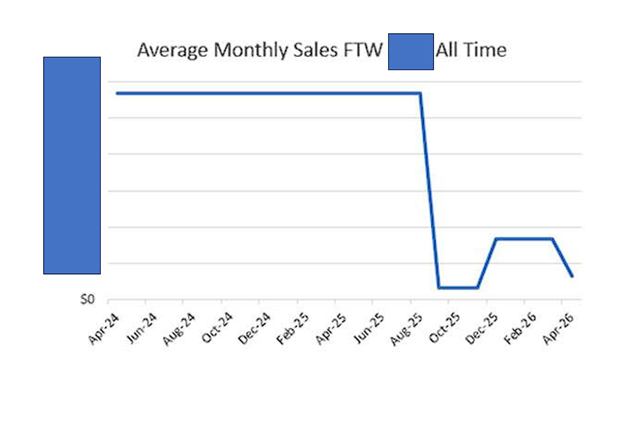
I have a chart showing a sliver of our export experience. I redacted our financial data and affiliate name—we’re not going to share private financial information.
This is a 17-month time period showing our average sales.
Then you see this big drop: 94% decrease in sales.
This is Trump’s tariffs.
The tariffs were implemented and all sales dropped 94%. And they stayed there for three months.
Then sales made a slight recovery. The reason? We did all kinds of gymnastics to salvage our sales so we could stay in business. We did holiday sales, interviews, all kinds of promotions.
However, the new average is still at a 70% decrease of what it used to be.
This entire timeline is two years. For 17 months, it was a high average. It plummeted 94%, stayed there for three months. We made a slight recovery for maybe four months. Then it dipped down again.
I intuitively feel this is what’s going on with sales and business and economy across the board.
The Takeaway
Most people do not own businesses. They are not entrepreneurs. They are not import/exporters. They do not understand or even pay attention to these types of numbers.
They just see the effect in their daily lives: the increase in prices, the inflation, the bills for tariff payments three weeks after packages are delivered. Things become unavailable. Things are no longer sold on the shelves. All kinds of companies go out of business.
This is what these tariff wars have done.
One takeaway: Please do not blame the small business for the gymnastics that folks like us are having to go through in order to adapt and adjust and find different ways of providing our products and services at prices that people can afford.
If you received tariff bills in that timeframe, you can get a refund. Contact FedEx. Seek out your refunds through the CBP CAPE portal.
This is not the fault or responsibility of the small business. This is because of the tariffs and the laws that were then ruled to be unlawful. This is all on the government. Not on the small business.