






Homesteading, Apricot Harvests, Off-Grid Living, and Facing Disability Trolls: Life on the HopeGirl Homestead
hopegirl April 13, 2026 0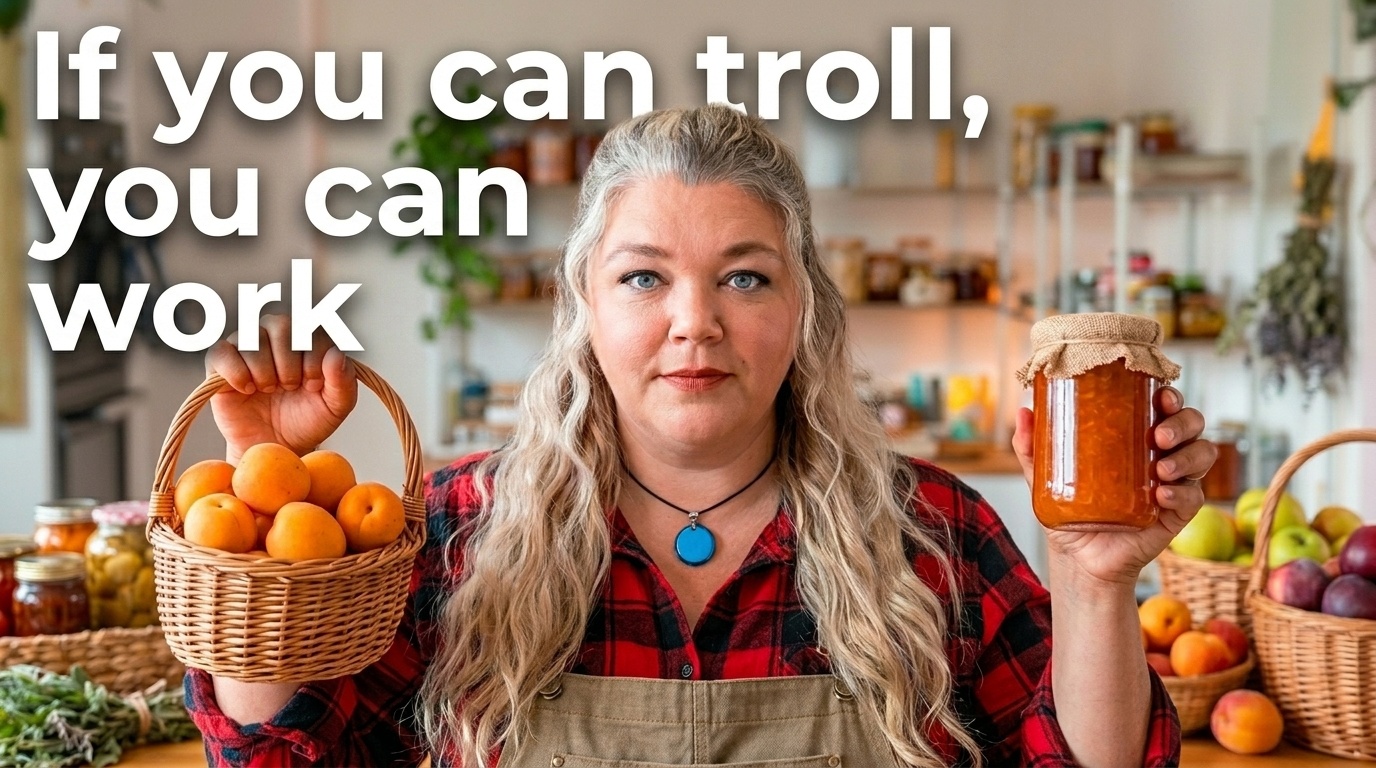
Here I am at the end of a long day, sitting on the back porch, reflecting on this life I’ve built — the homesteading, the apricots, and the practical faith that carries me through it all. My days are filled with planting, harvesting, problem-solving, and building resilience. Life in Morocco is both beautiful and demanding, but it’s a journey of growth, creativity, and deep gratitude.
Apricot Harvest and Processing
Apricots — mishmash in Morocco — fill the trees all around my homestead. We pick, clean, pit, and freeze them after every harvest. My kitchen becomes a creative workshop: jars of jam, bottles of syrup, trays of cakes, tarts drizzled with orange blossom water, and ice cream flavored with my homemade apricot puree. I’ve even started experimenting with apricot wine alongside dehydrated slices I store for the coming months. Every piece of fruit finds its place in our self-sustaining rhythm — nothing goes to waste.
Last year’s harvest filled entire shelves with jars, and this year promises even more. I watch the syrup thicken as it cools, pull golden tarts from the oven, and press dehydrated marigold petals from my own garden onto the finished desserts. The smell of orange blossom water drifts through the house and mingles with the sweetness of baking fruit. I call it Mishmash Day — a celebration of work, resourcefulness, and gratitude.
Self-Sustaining Living and the Garden
When I walk through my garden, I see a mosaic of life: amaranth, carrots, turnips, tomatoes, chard, kale, cabbage, snow peas, beans, peppers, tangerines, and squashes. My lavender, geranium, cactus beds, and date palms frame the driveway garden where I return compost back to the soil. Apricot, peach, pear, orange, banana, loquat, and olive trees surround the property in green abundance.
I grow sweet potatoes in buckets, train grapes along the trellis, and watch passion flowers bloom like stars from another planet. Rose petals fill the air with fragrance, and every corner of this land reflects the care and intention I pour into it. For me, homesteading is more than growing food — it’s living deliberately, tending life from soil to table.
Off-Grid Energy and the Clean Energy Academy
Beyond recipes and gardens, my homestead is also an engineering lab. My husband Tavon designs practical off-grid solutions: solar-powered water systems, battery backups, and circuits that store and recycle energy efficiently. Power outages are common out here, and rural life demands preparation. Our goal is simple — independence — keeping the water running, the fridge cold, and the lights glowing when the grid goes dark.
Our years in Morocco have taught us lessons that old farmers once knew by heart: invention grows from need. Living off-grid means solving real daily problems — ordering parts, importing tools, building systems for water and power — and all of it builds a kind of wisdom you simply can’t learn in theory. Our Clean Energy Academy is taking shape again, a space for experiments, schematics, 3D files, and working technology for grid-down life.
As Tavon always says, the goal isn’t “free energy” — it’s open, practical, clean energy. Systems that can help people now, not someday. From boost converters to battery circuits, every test brings us closer to sustainable independence. Our homestead is becoming a blueprint for resilience.
Work, Discipline, and Integrity
Running a homestead and a business side by side is constant work. Between cooking, shipping, managing staff, and developing energy projects, the hours blur together. But I consider that work a blessing — it brings purpose, connection, and the means to help others.
My business employs about thirty people, half onsite at the factory and half working online. Many of them come from humble circumstances, some connected through our local church. Those weekly paychecks sustain real families, and honest work builds real dignity. So when our business is attacked — through harassment, slander, and online trolling — it doesn’t just hurt my husband and me. It threatens the livelihoods of an entire community, and that I take personally.
Disability, Compassion, and Responsibility
I want to take a moment to address something more serious — disability and online harassment. I have genuine compassion for people living with real physical challenges. I worked as a home health aide, and I spent that time caring for disabled and elderly patients — cleaning, cooking, helping them navigate daily life with dignity. Those experiences shaped me. They gave me deep empathy and respect for people who truly cannot do what they once could.
But I also have to draw a line. Many people receive disability benefits honestly, and I fully support that. What I cannot accept is when someone spends hours every day producing videos, trolling workers, spreading defamation, and attacking others online — while claiming a total inability to work. If someone has the energy and capacity to invest hours harassing people, then they have the capacity to invest hours earning. There are real online jobs out there — writing, freelancing, editing, SEO — that offer dignity and fairness.
My call isn’t against disability. It’s against idleness turned destructive. Work, in whatever form a person is capable of, brings meaning. Harassment destroys community. And my homestead, founded on labor and faith, refuses that spirit entirely.
Faith and Proverbs 31
At the close of my day, as the apricot jars cool on the counter and night settles over the olive grove, we read from Proverbs 31 — the passage of the noble woman:
“She is clothed with strength and dignity. She can laugh at the days to come. She speaks with wisdom and faithful instruction is on her tongue.”
These words define my household. Strength, dignity, and devotion — they are the foundation of my homesteading, my marriage, my work, and my community. They remind me that trading, planting, cooking, inventing, and tending all fall under divine purpose.
The Proverbs woman provides food for her family, selects wool and flax, extends her hands to the needy, and ensures her lamp never goes out at night. That spirit lives here — in my kitchen filled with apricot syrup, in our lab filled with circuit boards, and in the community we sustain through honest effort.
Lessons from My Homestead
Living this way has taught me lessons I carry with me every day:
- Resourcefulness: Nothing goes to waste. Every apricot, every drop of syrup, every seed matters.
- Teamwork: My marriage is a true partnership — in work and in creation.
- Innovation through necessity: Off-grid living sparks a creativity as real as any patent.
- Faith through labor: Strength grows in daily diligence, and gratitude sanctifies every task.
- Community over conflict: Kindness feeds more people than criticism ever will.
Through apricot jam and solar panels, gardens and Proverbs, my homestead shows me every day what it means to earn peace by working the soil and keeping faith. Even when trolls attack, storms hit, or the power cuts out, my core remains: build, create, help, and trust that effort yields its own harvest.
I close my eyes and hold onto the final image of the day — orange blossom water cooling on the tarts, batteries charging in the workshop, and voices reading ancient words over the hum of cicadas. Strength and dignity are not theories. They are lived acts, repeated every single day.